
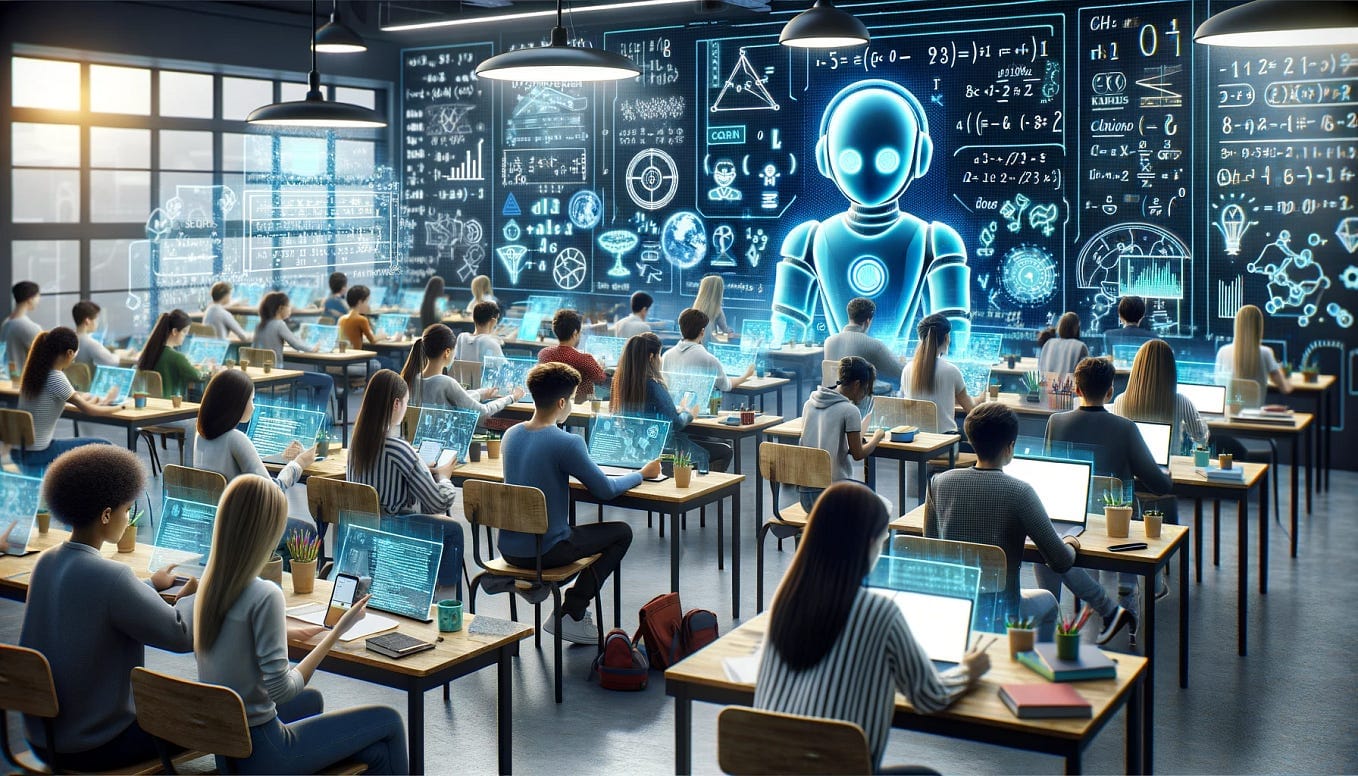
How Generative AI is Transforming Education: Insights, Opportunities, and Challenges
Generative AI tools — such as ChatGPT and other advanced language models — are rapidly changing how education functions. While concerns remain about students potentially misusing these tools, recent studies suggest that generative AI, when guided and integrated responsibly, can be a powerful asset in the teaching and learning process.
As society embraces innovation, generative AI stands out as one of the most disruptive forces reshaping multiple industries, from automation to creative content and data analysis. The education sector, in particular, is experiencing significant disruption, as these tools redefine the traditional roles of students and teachers.
Students Are Already Using Generative AI — Often Unsupervised
Although fears persist that generative AI might automate large portions of education or even threaten teaching jobs, data shows that students are independently exploring these tools. They are actively integrating AI into their study habits, sometimes without guidance.
A report co-authored by the Centre for Digital Thriving revealed that 51% of young people aged 14–22 have already tried generative AI, with about 4% reporting daily use. Among those who use it, 53% employ AI for gathering information, while 51% use it for brainstorming ideas. In other words, many students are incorporating generative AI as a personal learning assistant, enabling them to study faster and more creatively.
Similarly, a survey from Common Sense Media highlighted that students aren’t passively waiting for teachers or parents to introduce them to these tools. Instead, they are proactively researching and experimenting with generative AI to discover which apps best support their learning needs — whether for writing, brainstorming, or problem-solving.
Which Generative AI Tools Are Students Using Most?
According to the Common Sense Media AI report, text-based generative AI tools dominate among teens. AI-supported search engines and chatbots (like ChatGPT) rank as the most accessible tools. Over half of teens surveyed said they had used an AI-enabled search engine, while 51% had used a chatbot. Remarkably, about 20% reported using AI-enhanced search tools every single day.
This trend highlights how generative AI is already woven into students’ daily digital lives, providing a fast, on-demand source of knowledge and creative inspiration.
Parents Often Don’t Realize How Much AI Their Kids Are Using
A striking finding from the survey is that parents remain largely unaware of their children’s AI use. Only 37% of parents accurately identified that their kids had engaged with generative AI tools, while about 25% mistakenly believed their children had never used them.
This gap in awareness is partly explained by how subtly generative AI is integrated into search engines, apps, and even classroom tools. Another factor is a lack of open discussion about technology use at home. Some experts believe that stronger communication between parents and teens is needed to build healthy and responsible AI practices.
Generative AI: A Homework Helper, Not Just a Cheating Shortcut
There is a persistent narrative in education circles that generative AI’s primary function is to help students cheat. But surveys challenge this assumption.
About 53% of students reported using AI to help with homework, and roughly 40% admitted to using it for school assignments. Many respondents did not see their AI use as cheating, but rather as a modern approach to learning and research.
Nevertheless, academic integrity is still vital, and some students do acknowledge using AI inappropriately, such as to gain unfair advantages on tests. Educators need to balance supporting responsible exploration of AI with reinforcing honesty and fair learning practices.
Potential Negative Impacts: Bullying, Disinformation, and Deepfakes
AI technology also brings significant risks if left unchecked. For example, some teens worry about bullying, harassment, and misinformation driven by AI-generated content.
Survey respondents expressed concerns about malicious use of AI to create fake voices, misleading text, or even deepfake images to harass classmates or spread harmful rumors. Students recognize that these capabilities can be abused, and some are worried about being targeted themselves.
This underscores the need for digital literacy education around generative AI — students must learn how to identify fake content, defend themselves against cyberbullying, and use these tools responsibly.
Fact-Checking Remains a Challenge
Interestingly, only about half of the students who used generative AI for their schoolwork reported checking the accuracy of AI-generated information. However, the surveys noted a positive trend: older students were more likely to verify the output than younger ones.
Classroom conversations about AI can improve this. In fact, students who had class-based activities involving generative AI were 55% more likely to double-check what the AI told them using other sources.
The Path Forward: Responsible AI in the Classroom
One of the most promising takeaways from these surveys is that responsible and open discussions about generative AI can lead to better outcomes. When teachers integrate AI literacy into their lessons and discuss how to use these tools ethically, students are more likely to develop responsible habits.
Similarly, parents can play a crucial role. By becoming familiar with generative AI themselves and talking openly with their children about how these tools work, parents can help their kids maximize the benefits while avoiding the risks.
Generative AI is here to stay, and its role in education will only grow. As teachers, parents, and students adapt, building a culture of transparency, critical thinking, and ethical technology use is essential. Rather than trying to resist AI, educators and parents can harness it to foster more engaging, personalized, and efficient learning experiences.